
Fresh & Hot from Japan, 2 to 8 June 2016

Please enjoy fresh & hot news from Japan with comments by Europe-Japan Dynamics.

1 Jun. Learning drill like a game on the Internet, developed by Gakken to improve motivation

The Gakken Holdings will start new learning drills services on the Internet in July. The services are addressed to children of primary and junior high schools, and have game characteristics so that children will obtain custom of learning. The Gakken Holdings plans to increase the number of customers of its main business of tutoring school by attracting potential customers by an easy-access service such as the online learning drill service.

Comments: Would an online game motivate children to study?

2 Jun. “We’ll dispatch robots to factories that plan production increase”, a new business of Kawasaki Heavy Industries

Kawasaki Heavy Industries launched a new business to dispatch robots to work on the production line of factories that need to increase production temporarily. By dispatching robots instead of human work force, the company plans to offer solutions for the shortage of work force on the shop floor.

Comments: Robots to replace human workers — it was an SF dream. Now the dream may gradually come true taking such an avenue.

3 Jun. Russia to designate the Northern Territories as a special economic zone, aiming at promotion of fish farming and tourism

The Russian Ministry of Far East Development announced the policy to create a special economic zone in the Kuril Islands (Name of the Chishima Islands and the Northern Territories in Russia) before the end of this year. The Government intends to promote industry such as fish farming or tourism in Etorofu and Kunashir Islands. Expectation of Japanese investment in the region is increasing in Russia after Japan and Russia summit meeting of May. The country may demand Japan an economic cooperation in the new special economic zone.

Comments: Japan should take advantage of this opportunity to push interests of regional development forward in order to create a realistic and feasible solutions with Russia over this disputed territories  since the end of the WWII.

6 Jun. A number of “Drone class” being held in cities, responding demand for practice due to regulations limiting areas of flying 

An increasing number of fields and flight schools of a small robot plane (Drone) is open in Japan. While the Government included drone in the growth strategy of the country, the drone regulations increased due to accidents and other troubles. As a result, it has become difficult to fly drones in urban areas. This gave rise to demand of companies investigating business opportunities using a drone to practice flying the drone in safe zones.

Comments: It is an excellent business idea to provide the space and course for future drone service providers. While it is a nice market, an increasing use of drone will provide stable demand.

7 Jun. Honda factory in Kumamoto to partly start production in June, expecting the full operation in August

Honda is restarting production of motorcycels in the Kumamoto factory (Ohzu-machi, Kumamoto), which has been stopped since the Kumamoto earthquake, though partly by the end of this month. The factory is the only base of motorcycle production in Japan. The company is starting some of the 50 models and plans the full-scale production in the middle of August.

Comments: It is a good sign of economic recovery from the Kumamoto earthquake.

8 Jun. Real growth rate of GDP increased by 0.5% from the previous quarter, in January to March period

A real growth rate of GDP that excludes the influence of price fluctuation increased by 0.5% in the first quarter 2016 as compared to the rate in the previous quarter (Oct. – Dec. 2015), according to the second breaking news announced by the Cabinet Office. The rate is equivalent to the 1.9% increase if converted into the annual rate. The 0.5% figure was revised upward from 0.4% increase (1.7% increase in annual rate conversion) announced in the breaking news released in May. It is the first positive growth in the past two quarters.

Comments: Let’s see how the economic status will roll out.

  • All the news items are picked up from “Asahi Digital”, and summarized and translated by Europe-Japan Dynamics. The articles are not an official translation by the Asahi Newspaper.

Fresh & Hot from Japan, 27 to 31 May 2016

Please enjoy fresh & hot news from Japan with comments by Europe-Japan Dynamics.

27 May. “Words that speak to the heart” is what victims of atomic bomb want

Most of the victims of the atomic bomb in Japan seals their demand to request apology to the US President on his visit to Hiroshima, but want to hear “words that speak to the heart”. This is because they wish to have concrete steps to abolish a nuclear weapon that brings a horribly non-humanitarian ending.

Comments: Emotion speaks to Japanese.

30 May. Mizuho Bank to extend the retirement age to 65 by the end of March 2019, the first among the three major banks

Mizuho Financial Group (FG) has decided to extend the retirement age to 65 years old from the present 60 years old. The plan, which is the first among the three major banks in Japan, will be implemented by the end of fiscal year 2018 (March 2019). Recognizing an imcreasing importance of consulting on asset management and its efficient use, FG will benefit from those bank clerks with ample experience, while meeting a social demand to extend the retirement age.

Comments: The plan meets a requirement of the aging society. It allows the bank to benefit from experience built in-house and allow longer working opportunities to its employees. For the bank employees, however, the plan may mean that they must have skills needed by the bank in order to benefit from the extended retirement.

31 May. Twenty years of Pokemon, “Want to soak into the real world” said the president

Pocket Monster which greeted 20 years since the release of the game has grown up to be major game contents that represent Japan. The game is popular by a nickname of Pokemon, as well as its fancy goods. The sale of the Pokemon-related products amounts to over 4,600 billion yen worldwide. Upon an interview, President Tsunekazu Ishihara (58 years old) of company “Pokemon” which manages the brand said, “We want to promote Pokemon in a way in which people feel Pokemon is there in the real world.

Comments: Making Pokemon integrated in the real world is a very Japanese idea. Japanese take all the existence in the nature and spiritual world as their neighbours.

  • All the news items are picked up from “Asahi Digital”, and summarized and translated by Europe-Japan Dynamics. The articles are not an official translation by the Asahi Newspaper.

Fresh & Hot from Japan, 19 to 26 May 2016

19 May. SONY to finance US venture for AI R&D

Sony Corporation announced that the company will finance “Cogitai”, a US venture of the artificial intelligence (AI) development, to start collaboration. The amount of investment is not released.  The purpose is to integrate  knowledge from outside to be prepared for the times when AI is incorporated in household appliances. “AIBO” (Aibo), a dog robot sold by Sony was equipped with face and the sound recognition sensors, which were later applied for TV and digital cameras. Sony plans to feed results of the collaboration into future products.

Comments: The era of AI is coming close.

20 May. “The Japanese Nobel Prize winners, majority is on the achievements made by less than 45 years old” said the white paper on science and technology

The Cabinet approved the 2016 edition of the white paper on science and technology. The white paper contains a detailed analysis of all the 16 Japanese Nobel Prize winners after the year 2000. It was found that most of the achievements that lead to the Nobel Prize had been accomplished by the age of 45 in majority of the cases. The white paper concluded that the support to young researcher s was important.

Comments: It is also reported that all the researchers were in a stable post with a long term contract. This proves that a precarious situation on which many young researchers presently have to stay does harm to the development of science and technology.

23 May. 3000 participated in a disaster drill of earthquake, organised by an university in Kumamoto in the summer heat

The Kumamoto Gakuen University (Chuo-ku, Kumamoto-shi) performed the disaster drill that assumed an earthquake. The drill was planned to enhance crisis management at the time of the disaster, having taken a lesson from the Kumamoto earthquake that recorded seismic intensity of a little over six in the city. Approximately 3,000 students and staff of the university participated in the drill despite a very hot day that recorded 30 degrees in the mid-day.

Comments: The drill must have been efficient when people still strongly remember the fear of the earthquake.

24 May. “No plan to have more child” said 44% of the generation raising children in Japan, the largest among those countries surveyed

A survey by the Cabinet Office found that nearly half of the people don’t plan to have more child than now. This survey is to find attitude of those in a generation of child raising in Japan, the UK, France and Sweden. The percentage of those who replied this way is largest in Japan. The result reveals that the environment for child raising is hardest in Japan among those countries surveyed.

Comments: The result is no surprise for Japanese. An increasing number of low income family, precarious employment, small houses, long time to commute, shortage of child-care facilities, overwork of women, etc. have lead to a decreasing birth rate.

25 May.  Ise-Shima Summit to start on 26th, focus on cooperation in fiscal policy

A Ministerial summit of seven major countries (G7) will start on 26 May in Japan after an interval of eight years. The Prime Minister Shinzo Abe, who will chair G7 plans to propose cooperation in fiscal policy to stimulate the economy. It is worth watching how much would the G7 countries are prepared to cooperate among themselves.

Comments: Let’s watch how the debate will roll out.

26 May. G7 opened in Ise-Shima region, focus on cooperation over the world economy

A Ministerial summit of seven major countries (G7) started this morning. The largest focus this time is the level of cooperation among the leading economies as to political measures to lift the world economy. The agenda also includes refugee issues and counterterrorism. The Leaders’ Declaration will be adopted on the last day, 27 May.

Comments: Anecdotally, Ise Shrine, which has not been known outside Japan despite its cultural values, may see a large number of foreign visitors after G7.

  • All the news items are picked up from “Asahi Digital”, and summarized and translated by Europe-Japan Dynamics. The articles are not an official translation by the Asahi Newspaper.

Fresh & Hot from Japan, 12 to 18 May 2016

Please enjoy fresh & hot news from Japan with comments by Europe-Japan Dynamics.

12 May. Nissan to invest 200 billion yen in Mitsubishi Motors for its management rebuilding with a take-over in mind

NISSAN MOTOR CO., LTD. has decided to finance over 200 billion yen scale to Mitsubishi Motors (34% of the shares), which is being strongly shaken by the false reporting of fuel consumption rate. This act will be a de-facto take-over of Mitsubishi. Mitsubishi Motors will decide the acceptance of the investment in the board of directors on 12th. Nissan is also to decide an investment in the board of directors in the afternoon of the same day. Both companies will announce the capital tie-up in the afternoon. A large scale disgraceful affair of Mitsubishi Motors will lead to the massif reorganization of the automotive industry worldwide.

Comments: Automobile sector has responded to a disaster of a weak player so quickly.

13 May. Scholarship to support the study at the university will not lead to reduction of the welfare allowance

The Ministry of Health, Labour and Welfare has adopted a policy not to reduce the welfare allowance, when a high school students from a family that receives the allowance using the scholarship to pay an examination and entrance fees of the university. Though the Ministry once decided not to adopt this policy at an operation review in the autumn last year because “Proceeding to study at the university is not a common practice”, it has changed the decision to include the expenses to enter the university in the list of items exempted from the reduction of welfare allowance. This change is to prevent “Handing over of the poverty” from a parent to a child.

Comments: An increasing population living in poverty is a big problem and becoming an attention of policy measures in Japan. The issue of the handing over of the poverty over the generations is especially critical, as having a university degree is a “must” to obtain a decent job.

16 May. Panasonic, to recruit more engineers for the AI development, including scout of talented students

Panasonic announced that the company will increase the number of engineers involved in the R&D (research and development) of AI (Artificial Intelligence) by 2 – 3 times more than the present number (less than 100) by 2018. The company has also started scouting excellent students studying AI. Panasonic also created a training program for in-house engineers to acquire skills to be an AI specialist in cooperation with a university in the Kansai Region. Mr. Yoshiyuki Miyabe, Managing Director in charge of R&D, said, “Observing an increasing need for AI engineers in various areas, we wish to increase the number of engineers”.

Comments:  AI requires much wider creativity than the present software development. It’s interesting to see how Panasonic will grow creativity, against a Japanese IT sector culture which is not strong in the creativity front.

17 May. Toyota to build a new factory in Malaysia to  produce 50,000 vehicles per annum, aiming at the operation from 2018

Toyota Motor Corporation plans to build a new factory in Malaysia to start operation in 2018.  The new factory which will produce 50,000 vehicles per year will be built near the existing one that produces 80,000 vehicles per year. The planned investment is tens of billions of yen. The company thus will meet an increase of local demand, while maintaining efficiency in production.

Comment: The plan reflects rapid growth of demand for personal vehicles that corresponds to income growth in South East Asia.

18 May. Suzuki also cheating mileage data

In connection with the issue of mileage camouflage of Mitsubishi Motors, Suzuki Motor Corporation has revealed that the company measured the mileage data of cars by a method different from the one in the national regulations. Chairperson Kazaru Suzuki reports it to the Ministry of Land, Infrastructure and Transport in the afternoon of 18th. The possibility of the false measurement of the mileage may spread throughout the industry. Nissan and Toyota have reported to the Ministry that they found no problem.

Comment: If the State has been OK with the paper reporting, it’s easy for companies to cheat. What can consumers trust?

  • All the news items are picked up from “Asahi Digital”, and summarized and translated by Europe-Japan Dynamics. The articles are not an official translation by the Asahi Newspaper.

Fresh & Hot from Japan, 5 to 11 May 2016

Please enjoy fresh & hot news from Japan with comments by Europe-Japan Dynamics.

5 May. Japan-Arab Ministerial economic forum started, Casablanca

“Japan-Arab economic forum ” that aims at the reinforcement of the economic relations of Japan and the Arab countries began in Casablanca, Morocco, on the 4th.of May. The cabinet ministers from each country discussed those themes such as the diversification of the economy, human resource development, etc. The Minister of Economy Trade and Industry, Mikio Hayashi, announced a policy to promote investment from Japan, stating “We wish  to extend the number of Arab countries that signed the investment pact from the present five to more than ten by 2020”.

Comments: The economic ties between Japan and the Arab countries have not been so tight compared with those between European and Arab countries. It will help to both sides of the countries to diversify business partners.

6 May. Three weeks after the earthquake, Toyota resumed operation of all the factories and Honda, a part of it

Those factories of Toyota Motor Corporation and Honda which suspended production due to the disaster of Kumamoto earthquake, or lack of supply of components, resumed the  production. Toyota managed to restart all the domestic production lines three weeks after the earthquake. Honda started operation of a part of the production in its factory in Kumamoto prefecture.

Comment: Good to know that economic activities are coming back.

9 May.  Real wage increased by 1.4% in March, two months in a row, reflecting the wage increase in an annual negotiation in the spring, according to the labour Ministry

The Ministry of Health, Labour and Welfare announced in the breaking news of monthly labor statistics that the average cash payroll per worker in March was 278,501 yen, up by 1.4% compared to the same month the last year. The increase is seen in two months in a row. The consumer price level was the same as the previous year and “the real wages” that excludes the influence of the price fluctuation also increased by 1.4% for two consecutive months.

Comment: Hope the increase signals the economic recovery.

10 May. Tokyo may permit housekeeping work by foreign nationals, the third prefecture if implemented

The Government of Tokyo will examine if it could lift the ban on the housework service by the foreign nationals, using “a special ward system” that allows to relax regulations in limited areas. If implemented, Tokyo will be the third local government that lifts the ban. Some other local governments might follow the change of policy of Tokyo, which has been careful in allowing the foreign nationals to take housekeeping work.

Comments: Though this news signals a change of Japan to wider opening of working opportunities of foreign nationals, this issue should not be limited to some “special” areas. Japan should up-date at the national level its outdated policy and regulations that still strictly prohibits foreign nationals to work in the country.

11 May. “Iku men league”, a group of male members of Diet advocating men’s participation in child raising,  requested improvement of the status of children in waiting list for nursery schools

The bipartisan “Iku men league (League of male members of Diet who are willing to share responsibility of child raising)” submitted a request for the improvement of the issue of children in waiting list for nursery schools to two Ministers, Minister of Health, Labour and Welfare Yasuhisa Shiozaki, and Minister in charge of vitalizing all the population of Japan, Katsunobu Kato. The league requested not to force women alone to bear the burden and difficulties arising from having children who cannot be taken by nursery schools due to lack of capacity to meet demand.

Comment: This is a good action itself and makes those men who are willing to share responsibility of child raising visible to the public. Such men are still rare in Japan.

  • All the news items are picked up from “Asahi Digital”, and summarized and translated by Europe-Japan Dynamics. The articles are not an official translation by the Asahi Newspaper.

Fresh & Hot from Japan, 21 Apr. to 4 May 2016

Please enjoy fresh & hot news from Japan with comments by Europe-Japan Dynamics.

21 Apr. Mitsubishi Motors manipulated fuel consumption data of over 620’000 cars in four models

Mitsubishi Motors announced on the 20th that the company illegally manipulated the fuel consumption data of 4 models of the light vehicle. This is to show the data better than it really is, and the number of cars concerned amounts to 625,000. Mitsubishi Motors has stopped production and sale of these cars. The Ministry of LandInfrastructure and Transport began an onsite inspection in the company’s technical center (Okazaki-shi, Aichi-ken) on the same day.

Comments: There must be a long lasting management problems in the company as the data manipulation is the last thing that may happen in the production process.

22 Apr. Releasing the digital textbook to schools from 2020, said Ministry of Education, Culture, Sports, Science

The Ministry of Education, Culture, Sports, Science and Technology decided to lift the ban on digital textbook for primary, junior-high and high schools from 2020. The Ministry expects the digital textbook to efficient enable learning integrated with sound and video functions. The ministry plans to seek advice to a panel of experts today.

Comment: Teachers will need training to make use of the digital textbook efficiently, as children are digital savvy.

25 Apr. Toyota restarted assembly in 4 factories in Tokai and Tohoku regions, after stopping production in 15 factories after the Kumamoto earthquake

Toyota Motor Corporation reopened the assembling of the vehicle in four factories in Tokai and Tohoku regions, including Tsutsumi ground of Toyota-shi, Aichi ken. The company stopped the assembly in 15 factories in Japan after the Kumamoto earthquake, due to lack of supply of door parts produced in Kumamoto ken.

Comment: One week after the earthquake, what a prompt recovery it is!

26 Apr. The National Police Agency to start operations of the security intelligence center as one of the measures of counterterrorism

The National Police Agency is to start operations of the “Internet OSINT (Open Source Intelligence) Center” to automatically collect and analyze information found over the Internet related to terrorism. The center is one of the measures of the counterterrorism by improving ability to collect and analyse information as a measure of counterterrorism, against background of an increasing terrorism in Europe such as those undertaken by extremist groups such as the Islamic State (IS).

Comment: Hope that Japan may contribute to the security intelligence to prevent terrorism.

28 Apr. Reduction of 7,350,000 employment as a result of introduction of AT and Robots, according to “the fourth Industrial Revolution”

“- – that the employment in 2030 will be less than the one today by 7,350,000 jobs. This would be due to the automation enabled by the artificial intelligence (AI) and the robot technologies, etc. The Ministry of Economy, Trade and Industry (METI) experimentally calculated the influence of “the fourth Industrial Revolution” brought by AI or big data brought in terms of the number of the employment. On the other hand, METI also says that the employment decrease could be 1,610,000, if the new employment would be created as a result of restructuring.

Comment: Job decrease or creation is a complex subject. We must create new business opportunities in those areas which only human beings can do.

29 Apr. Smartphones become TV at disaster, TV stations delivered special programs of the earthquake via the air and Internet

Hundreds of small level of earthquakes still continue in Kumamoto, and about 40.000 people live as evacuees. While the TV stations broadcasted useful information minute by minute, many people cannot watch TV in such environment because of the blackout spread at the stricken area, or as they stay in a refuge or in a car to avoid risk of the collapse of buildings. To overcome such difficulty, major TV stations made is possible for the affected people to watch the TV programs related to the earthquake by the smartphones at the same time as the programs on air.

Comment: It was great that the Internet infrastructure was not shut down in the Kumamoto earthquake case. This experience demonstrate us how important it is to maintain the infrastructure of information in disaster areas.

2 May, G7 Energy Ministerial Meeting ended with “Kitakyusyu initiative”

The Ministerial meeting of Energy Secretaries of seven major economies (G7) ended with a joint communique “Kitakyusyu initiative”, that emphasized the importance of continued investment in oil and gas field developments, and creation of a transparent market of natural gas.

Comment: Stable energy supply through transparent markets is critical to the world economy.

3 May, “Will put in place an additional monetary policy, if needed”, said Mr. Kuroda, Governor of the Bank of Japan, upon an increasing value of yen

Following an increasing value of yen, Mr. Haruhiko Kuroda, the Governor of the Bank of Japan stated press, “My decision is unchanged to take additional monetary policy without hesitation if I judge it necessary to achieve the objective of price stability of 2% “. He said that in Frankfurt where he was visiting to attend a general meeting of the Asian Development Bank (ADB).

Comment: The value of yen is high, when the shape price of Japanese companies is low. It’s a tricky situation.

4 May, Objection to the  targeted monitoring of currency exchange rate by the US, unexpected debate by  the Finance Ministers of Japan, China and Korea

The Finance Ministers and Governors of the central banks of Japan, China and Korea discussed the US designation of these countries as targets of monitoring in its monetary policy though this issue was not in the original agenda of their meeting in Frankfurt held on the 3rd . Minister of Finance of Japan, Taro Aso, said that the Japanese exchange policy would not be affected by the designation by the US.

Comments: It is likely that the Japanese exchange policy would take into account the US designation of Yen as a currency to monitor, despite the initial reaction by Mr. Aso.

  • All the news items are picked up from “Asahi Digital”, and summarized and translated by Europe-Japan Dynamics. The articles are not an official translation by the Asahi Newspaper.

Fresh & Hot from Japan, 13 to 20 Apr. 2016

Please enjoy fresh & hot news from Japan with comments by Europe-Japan Dynamics.

13 Apr.  Ever increasing payments by credit cards, E-commerce companies trying to attract consumers by offering interesting gifts

Payments made by credit cards is increasing. While the number of the cards stays almost at the same level, volume of payments per person has been increasing as the use of online sales via the Internet is increasing. Card companies are trying to further increase the payment per person by offering interesting gifts to consumers by means of the usage points.

Comments: This trend might pave a way to an increasing use of the bit coin.

14 Apr. The first litigation against Takahama Nuclear Power Plants of more than 40 years old requesting”disapproval” of the re-operation due to high risks

A group of seventy-six residents in 14 prefectures and cities, including Takahama-cho, Nagoya city, Tokyo, Osaka, Kyoto, Shiga, Aichi, Gifu and Mie, has filed an administrative litigation in the Nagoya District Court to request not to authorize the extension of the operation of Takahama Nuclear Power Plant 1 and 2 owned by Kansai Electric Power (presently not in operation for checking-up) that is more than 40 years old. It is the first litigation that focuses on the risk of the old nuclear power plant.

Comments: I see two important points in this action;  first, the action is preventive and the second, it involves the public from wide areas, going beyond the cities and municipalities that would be directly affected in case of an accident.

15 Apr.  Earthquake of Level 7 in Kumamoto 

A strong earthquake of maximum seismic intensity 7 happened in Kumamoto prefecture around 9:26 PM on 14 April. The area that had the strongest eismic intensity 7 was Mashiki-machi, Kumamoto, according to the Meteorological Agency. The Agency also said that the earthquake of seismic intensity 7 is the first in Japan since East Japan great earthquake disaster of 11 March, 2011.

Comments: The danger of the earthquake is that it happens anytime anywhere at any strength. Despite studies be the biologist, the earthquake is still largely unpredictable.

18 Apr. Sendai Nuclear Power Plant (Kyushu) “No problem” even with the move of the seismic center, according to the Nuclear Regulatory Commission

The Nuclear Regulatory Commission held a meeting on 18th, and confirmed that there was no irregular phenomenon observed at for the moment in atomic energy facilities in the area of the Kumamoto Earthquake, such as Kyushu Electric Power Sendai Nuclear Power Plant (Satsumasendai-shi, Kagoshima-ken), which is the only nuclear plant in operation in Japan.

Comments: Despite the confirmation of the nuclear authority, a large number of Japanese public wish the Sendai Plan to stop operation as a preventive measure. People know that the Fukushima plants were said to be “Absolutely safe”, before the disaster in 2011.

19 Apr. Beef bowl, baked confectionery, air cushion, etc., companies offering various support to victims of Kumamoto earthquake

Activities of the companies sending supporting supplies are getting into the full swing. The supplies include those products developed taking the lesson from the past disasters including the East Japan great earthquake disaster. That said, the companies must be cautious in moving forward and are watching carefully the status of the affected areas. The the earthquake still continues and the acceptance systems in affected areas are not yet set, having the infrastructure (road, electricity, etc.) cut apart.

Comment: The Japanese learned a lot since the East Japan great earthquake as to the importance of coordination between receivers in disaster areas and donors from other parts of the country.

20 Apr. 97% reopened already, Convenience stores in Kumamoto having taken lessons from the disasters in the past

A number of convenience stores have reopened business in the disaster areas. It is reported that about 97% of the stores are open again in Kumamoto Prefecture as a whole, among the three major convenience storers, Lawson, Seven-Eleven Japan and Family Mart. Taking lessons from the disaster experiences in the past, the stores shipped drinking water and food as a priority and gathered employees from the whole country to support shop operations in the disaster areas.

Comment: Convenience stores are quick to resume business taking lessons from disasters in the past, including the East Japan great earthquake in 2011.

  • All the news items are picked up from “Asahi Digital”, and summarized and translated by Europe-Japan Dynamics. The articles are not an official translation by the Asahi Newspaper.

Fresh & Hot from Japan, 6 to 12 Apr. 2016

Please enjoy fresh & hot news from Japan with comments by Europe-Japan Dynamics.

6 Apr. New students enjoyed Virtual Reality, an entrance ceremony of “N” Senior High School, a distant learning school via the Internet

“N” Senior High School, a distant learning school via the Internet, organized the first entrance ceremony in Roppongi, Tokyo. The new students who gathered there were equipped with the head-mount display  and enjoyed the real-time video of the physical school in Bruma-City, Okinawa, via the VR (Virtual Reality)

Comments: What an interesting school it is! VR may require new communication skill set and tips to use it efficiently.

7 Apr. “Growth expectation is decreasing”, said a Nobel Prize winning economist at the Economic Assessment meeting

Prime Minister Shinzo Abe discussed in the fourth international finance and economic assessment the current status of world economy with Professor Jean M. Tirole of Toulouse University, a laureate of the Nobel Prize Economic Sciences in 2014. Professor Tirole said, “The world economy is in a difficult situation. A growth expectation is becoming dull.”

Comments: PM Abe’s job is to take action to turn the economy upwards, following the views of the first class economist.

8 Apr. Surprise step-down of a charisma manager, future of Seven & i Holdings unclear

Mr. Toshifumi Suzuki, CEO of Seven & i Holdings Co., Ltd. (HD) and a well known charisma manager for his management to lead the largest convenience store chain in Japan, announced all the sudden his retirement after an annual meeting of investors. What happened in the company which continued brisk achievements?

Comment: A turning point has arrived even the strongest and largest convenience store chain of Japan.

11 Apr. Cyberthlon, a competition of the disabled with robotics, to be held in Switzerland this autumn

“Cyberthlon”, the first international competition of the disabled using sophisticated artificial arms and legs, and wheelchairs using robotics, will be held in Switzerland this autumn. Researchers of universities and the venture companies plan to participate from Japan. They are working on the development of robotic equipment for the handicapped expecting the technology to be applied to products and equipment for the every-day use of the elders and handicapped in the future.

Comment: What a wonderful idea it is to develop application of robotics for the handicapped and aged! The Cyberthlon will be organised by ETH and held in Zurich in October.

12 Apr. Sharp to double the number of recruit with focus on young employees next spring

Sharp announced the plan to employ 290 new college graduates in the spring of 2017. Though the company recruited 165 people this spring, only 151 entered the company most probably due to invisible future of the company. Now that Sharp is ready for its own rebuilding under the management of Foxconn Technology Group (Taiwan), the company plans to enhance recruitment strategy addressed to young people.

Comment: Though it’s a reasonable plan for the company, the Japanese labour market is shrinking especially with the younger age groups. It remains to be seen how the company will go through this recruitment challenge.

  • All the news items are picked up from “Asahi Digital”, and summarized and translated by Europe-Japan Dynamics. The articles are not an official translation by the Asahi Newspaper.

Fresh & hot from Japan, 1 to 5 Apr. 2016

Please enjoy fresh & hot news from Japan with comments by Europe-Japan Dynamics.

1 Apr. “Chance of the leap!”, said CEO of Kyushu Electric Power Co.on the market liberalisation of power supply at the welcome ceremony of the new employees

The retailing of the electricity is fully liberalized in Japan from 1 April. This will allow the household to choose the electric power supplier. Taking this drastic change into account, CEO of Kyushu Electric Power Co., Mr. Michiaki Uryu, alerted to about 200 new employees at the welcome ceremony, saying, “Our industry enter the full competition.”. He also encouraged the new employees, “We expect you to be leaders of the change of the industry. Let’s take challenges ahead together”.

Comment: The existing monopoly would remain strong for coming years as the power supply industry is heavily rely on infrastructure built on the ground. We learned this lesson from the market liberalization of telecommunications, in which the ex-monopoly remains to be strong till today.

4 Apr. Cost of solar power generator for homes down by 40%, ”Self-supply” of power coming true?

According to calculation undertaken by the Renewable Energy Institute (Tokyo), costs of the power generation by solar power by household has become the same as the electric bill of a major electric power company, if used over 20 years. This is due to the decrease of the installation costs of the solar power generator systems in the past several years. The “self-supply” of the electricity, without being dependent on major power suppliers, may not be a dream in future if the batteries for home use will become popular.

Comment: Development of the renewable energy is MUST for human beings.

5 Apr. “What is your trusted information source?”, survey addressed to the 18 and 19 years old

The age eligible for voting will become 18 years old, younger by 2 years than before, from a House of Councilors election planned for this summer. Asahi Shimbun Co. has undertaken a survey to ask information sources needed for election used by the 18 and 19 years old by mailing a questionnaire to 3000 people (Over 2000 replies obtained).

With regard to the information sources about politics and social problems, “TV” got 86% of the vote, followed by  “Web sites and SNS” (58%), “News paper” (28%), and “School teachers and courses” (26%) (multiple answers).

When asked the most trusted sources among the information sources they use, “TV” got the highest vote of 52%, followed by “News paper” (9%), and “Web sites and SNS” (8%). The least trusted source was “School teachers and courses” (7%).

Comment: Influence of TV on young voters’ decision is considerable, despite their heavy use of the web and SNS in day to day life.

  • All the news items are picked up from “Asahi Digital”, and summarized and translated by Europe-Japan Dynamics. The articles are not an official translation by the Asahi Newspaper.

Inside a Japanese head — How to avoid fatal mistakes with Japan, Zürich, 19 May

Workshop

Inside a Japanese head —

How to avoid fatal mistakes with Japan

In cooperation with

sjcc_logo

Tokyo by FB_2016-2
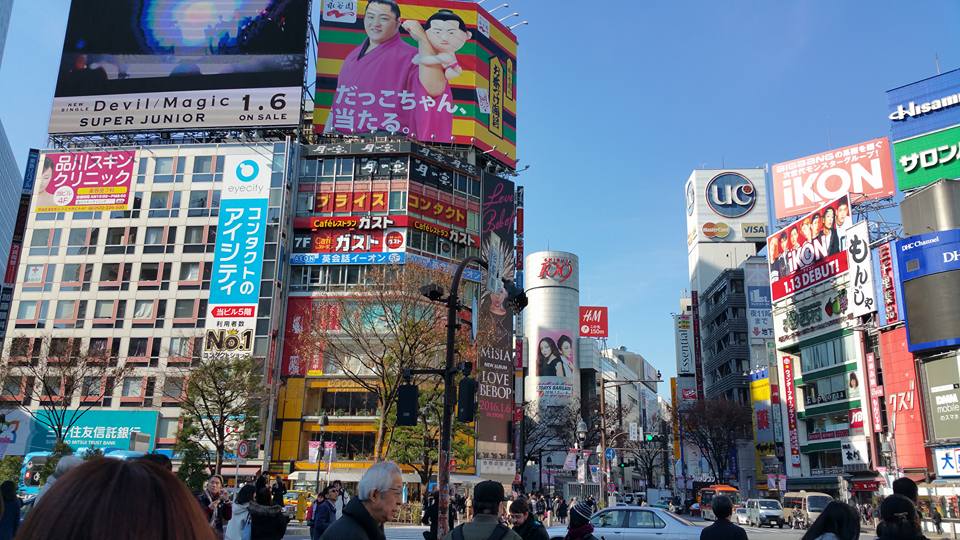
Tokyo is always dynamic. What is in a head of Japanese? (Photo: F. Behrouz)

What is going on inside the head of your Japanese business partner?

A unique workshop will take place enabling you to visit the inner workings of your Japanese business partners and clients.

The workshop will be interactive. You will be challenged by practical situations, which many Swiss people encounter. You will learn how to work better with your Japanese contacts and benefit more from your exposure to Japanese culture.

Please bring your specific problems and challenges with Japan to the workshop. A Japanese senior insider will examine the problems with you on site and help find solutions.

Potential problems

  • “The Japanese decision-making process is so mysterious!”
  • “I don’t know if I’m interacting well with my Japanese colleagues.”
  • “Why do the Japanese always do things in their own way?”
  • “How can I say ‘No’ to my Japanese customers without offending them?”
  • More …

Who should attend?

  • Executives and managers in charge of Japan for; Sales, Business Development, Global Operations, Project Management, Training, Human Resources, and more.
  • Representatives of public, commercial and cultural associations who interact with Japan.

Your benefits

  • To better understand the Japanese way of thinking
  • To feel at ease interacting with your Japanese business partners and employees
  • To discuss face to face with senior experts and clarify your pending issues with Japan

Program

  • Culture and management
  • Positioning of Japan in the world cultures
  • Background of Japanese way of thinking
  • Five clues to understand inside a Japanese head
  • How to use the knowledge in your own assignments

Practical information

Date Thursday, 19 May 2016

18:30 Workshop

20:30 Aperitif and Networking

Location  

Salon Rudolf, Au Premier

Bahnhofplatz 15, 8021 Zürich


Organisation Europe-Japan Dynamics and

VDF Coaching & Cultures, in cooperation with SJCC Swiss-Japanese Chamber of Commerce

Fees (Please pay at the door)

SJCC Members CHF 100.-
Non-SJCC CHF 150.-

“Come with three, pay for two” — If two persons participate from the same organisation, the third person will be free.

Registration for the workshop is kindly requested by 6 May 2016.

Registration     Yoshiko KURISAKI, Founder, Europe-Japan Dynamics

e-mail yoshiko.kurisaki@gmail.com / Tel. 076 411 6076

<Attention!>

  • In case of cancellation, thank you for letting us know by 6 May latest. It will allow us to give a seat to someone who needs it.
  • We will be obliged to charge cancellation after 9 May or no-show to cover the costs of the workshop.

Who is Yoshiko KURISAKI?

Yoshiko, a Japanese national, is the founder and executive consultant of Europe-Japan Dynamics, a specialist of cross-cultural management between Switzerland, Europe and Japan. She has unique competence drawn upon over 20 years of business experience in Japan (NTT) and Europe (OECD and SITA). Member of SJCC. Customer testimonials –> http://http://en.geneva-kurisaki.net/values/

Who is Verónica De La Fuente?

Verónica De la Fuente, a Chile national, has been working as an intercultural trainer and consultant in the last 15 years. Veronica is a Professional Coach certified by the International Coaching Federation (ICF). In the workshop, she will introduce the positioning of Japan in the world cultures.

Looking forward to seeing you!

Workshop Flier –> Workshop_Inside a Japanese head_May_2016_v2