Welcome to Europe-Japan Dynamics!
A specialist in cross-cultural management between Europe and Japan
This is our blog page.
Please click here for what we do.
Please click here for who we are.
************************************
I have learned from a friend of mine familiar with Swiss industries that there is a company that sends young apprentices of 15 to 16 years old to China for six months. (Note for Japanese readers: “Apprentices” is a part of professional training system unique to Switzerland. They are not employees of a company but students of professional schools. They work in a company, which provides on the job training for 3-4 days a week. They thus obtain professional skills on the shop floor through work.)
This company sends apprentices to overseas for as long as six months, though they are not its employees. What company is it?
Those personnel who carry on international business are indispensable for the Swiss industries as they largely address the markets worldwide. It is also true that the industries owe much on personnel for innovation, for which Swiss companies incessantly strive to stay competitive in the international markets.
That said, why does this company invest that much to grow its personnel? What is the management philosophy behind?
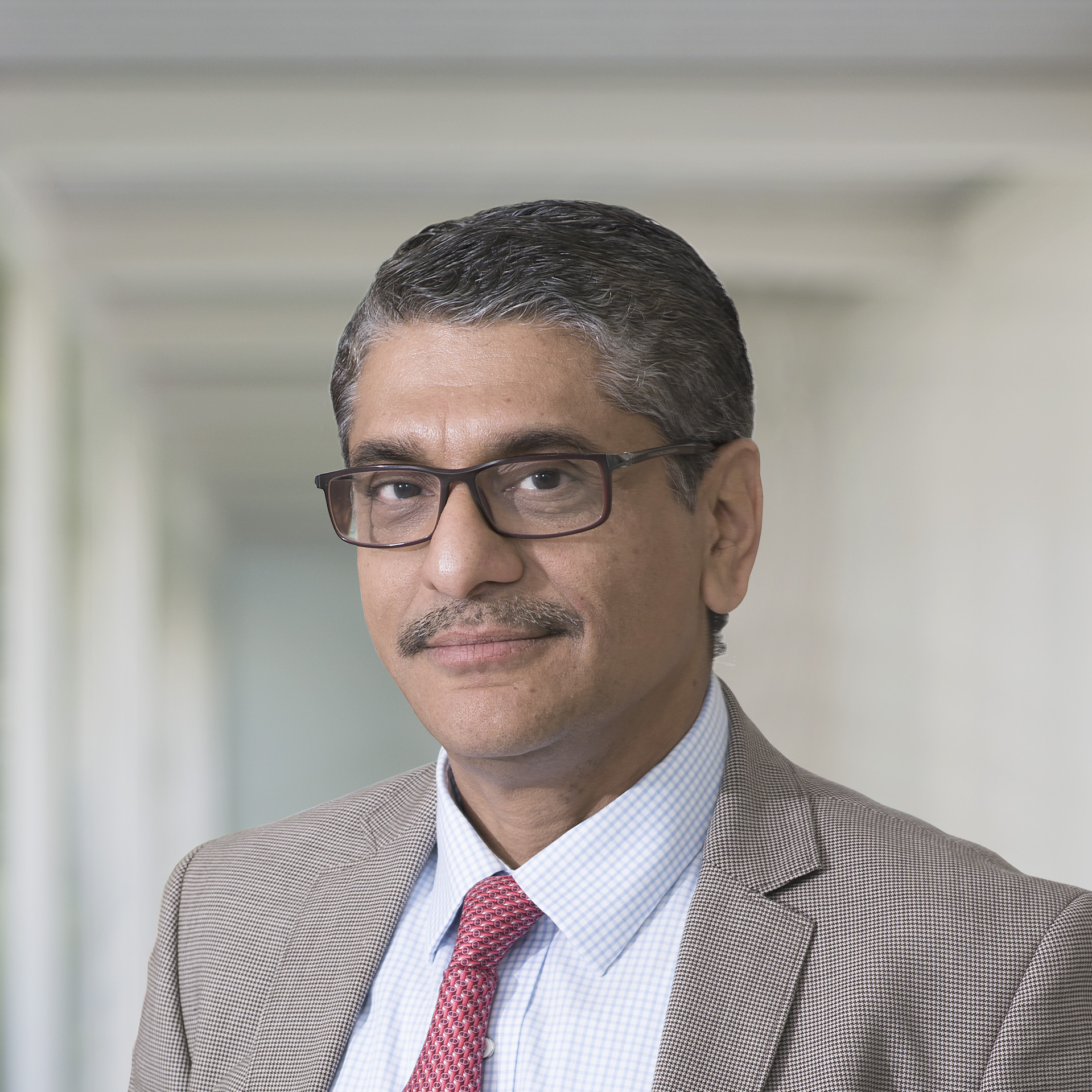
With these questions in mind, I interviewed Mr. Dipak Mane (Photo), Director of Global Human Resources of the company, Bühler Group (https://www.buhlergroup.com/global/en/home.htm).

What company is Bühler?
Founded in 1860, Bühler continued developing over more than 150 years as a family-owned company.
Based on the original strength of iron casting and roller mills based on the iron, the company developed to become the first-class company in the world markets for the its excellent technologies. During the course of development, Bühler steadily enlarged its business areas to include those areas related to its core competence of iron casting and roller mills.
“The company presently provide machines and solutions indispensable for food industries, ranging from raw materials such as grains, rice, cacao and coffee to medium- to end-products, and livestock feed (Source: https://premium.ipros.jp/buhlergroup/). Bühler further extends its business edge to support sustainable mobility and the total solutions to ensure production of the healthy food.
What are policies of the HR department to ensure competitiveness in international markets?
Two things are most important. One is the sense of purpose, i.e. to be always conscious with the purpose of technologies. The sense of purpose has been the spirit of our company since its birth. To serve this purpose, we have been investing 4 to 5 per cent of turnover in R&D.
The second important thing is the profit.
We must hold these two things together.
The family-management enables to maintain these two essential points. Top managers may manage the company in line with their own management philosophy and make decision swiftly without interference by external stakeholders.
The HR policy is to put the management philosophy into practice. The purpose of Bühler’s HR policy is to maintain employees motivation high. Those are people who always improve their skills and knowledge and who are interested in doing better job all the time. Such employees continue self-improvement all the time by participating in training opportunities. In this sense, our company is a training company, such as a university.
We invest much in trainings. One per cent of Bühler’s personnel costs is spent in training and we plan to raise it to two per cent by the year 2020. In Swiss Francs, the investment is about 6 – 9 billion Swiss Francs per year.
One employee takes 1,85 days of training per year. We plan to increate this number to be 2 in the year 2020.
As for apprentices (those young women and men of 15 and 16 years old) who just stepped in the professional lives, Bühler has a history of 100 years of their trainings. The total number of the apprentices we trained adds up to 7,700.
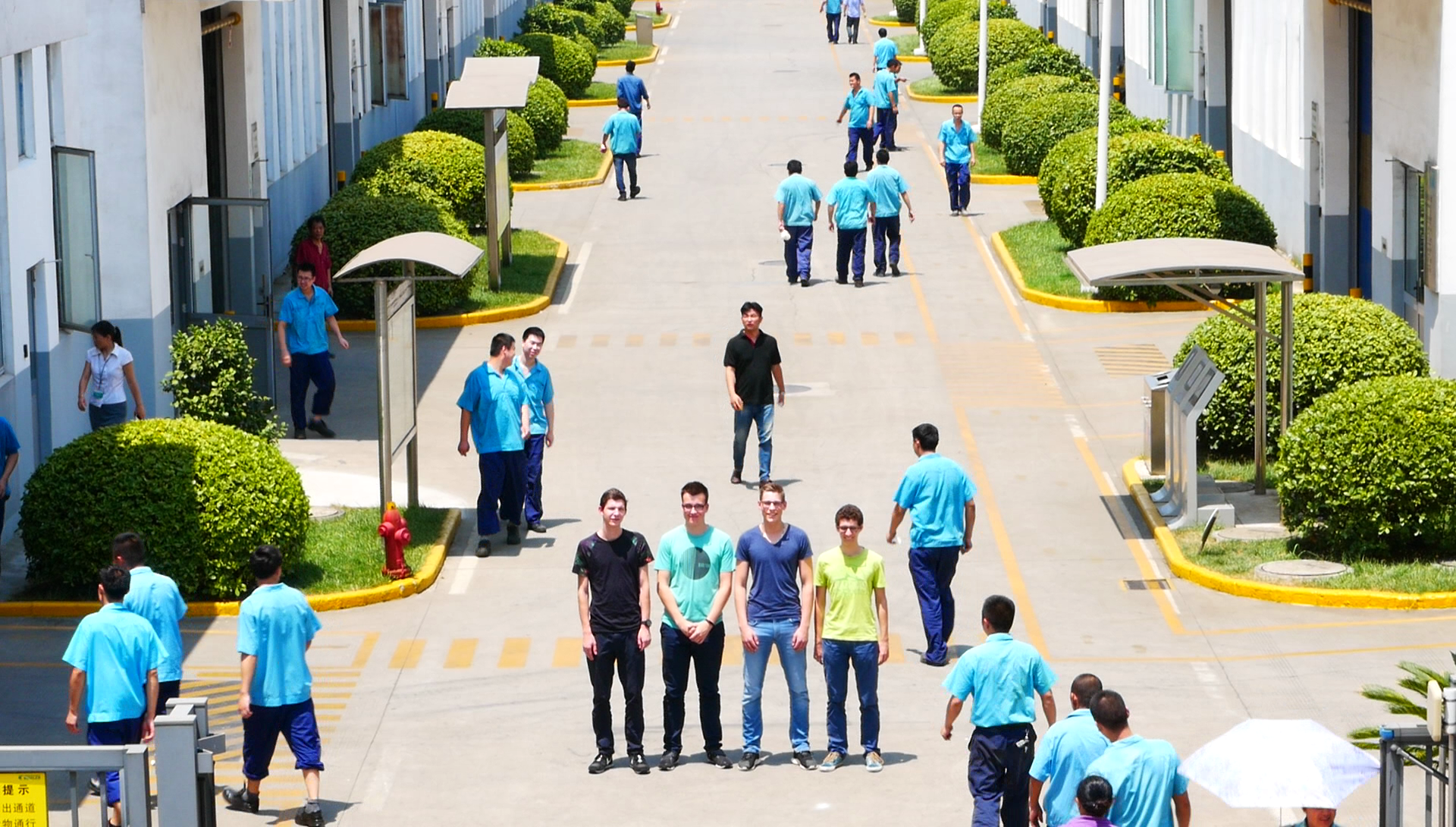
We started an overseas training program about ten years ago. About 600 apprentices who come to work in Bühler every year are sent to various countries as a part of the training program. One half of them stays in Switzerland and the other half go abroad, such as Austria, China, India, Brazil and South Africa.
What are reasons of such a HR policy? What do you think of a risk that those employees who obtained higher skills and competence may leave the company for better salary?
Our CEO thinks that we would have to keep a number of employees with low skills and competence who may not leave the company, if we do not provide them with training opportunities.
In fact we see positive results. An employee retention rate of Bühler is as high as over 73 per cent. One thousand apprentices out of those who came to the company for training join Bühler as formal employees.
We witness significant results in the young people who leave their hometowns to meet the new people in other countries with different cultures.
In general terms, many people wish to stay in the company that provide trainings, as they may improve their competence and obtain new skills such as management. Young apprentices watch during their training period how long-lasting employees develop themselves, and project their own future over the elder workers. This makes the young to wish to continue working in Bühler.
What does the company obtain from this unique training?
We obtain the diversity and inclusion (D&I), which are indispensable for innovation. Bühler has a built-in system for people with a wide variety of background to work together.
Though it is surely a large investment to send apprentices to overseas locations for several months, the return is huge. The young learn through their day-to-day work cultures, languages and the market needs.
We not only send apprentices to overseas. We also provide an online program for them to stay in touch with the Swiss Headquarters during the overseas training period. It is a remote sit-down training based via video conferencing (ClassUnlimited). The program is available starting from Switzerland and China to become available in other countries.
Such a training lies in the centre of the company. Apprentices obtain skills and leadership in order to brush up the sense of purpose.
We do not expect a return on investment (ROI) in the short terms, because it is our belief that the smart employees are the core resource of a company.
We always seek ways to improve competence of employees. Means to do so is not limited to trainings.
We are aware that training is a long-term investment and continue increasing the variation of the training.
It should also be noted that those who enjoy benefits of trainings are not limited to a small number of employees who are expected to take senior management positions in the future. It is Bühler’s management philosophy that we address all the employees for trainings.
In what ways would HR department contribute to the innovation?
The birth of innovation requires a certain ecosystem, or a chain of various factors. The HR department is an integral part of the eco system of innovation. For example, the HR provides the office environment that enables employees to communicate better with each other, encouragement of collaboration with Universities, and sponsor some research programs in Universities.
In Bühler, we organise an innovation competition participated by 2,000 employees worldwide. This means 15 per cent of all the employees participate in the competition.
We must find those needs which market has not yet found. Our Chief Technology Officer (CTO) always tells us that 99 per cent of knowledge is outside the company. We must continue looking for good ideas all the time. For this purpose, we will continue working with those outside the company, including start-up companies.
What kind of company would Bühler want to be in the future?
We want to see Bühler for which employees want to work most in the world. Young employees know well what such as a company is all about. They wish to work for a company that has social purposes. They want their company contribute to something that help people, such as to alleviate adversarial consequences of the climate change, etc. Social contribution is Bühler’s tradition. We wish to continue investment in R&D. Going beyond Industry 4.0 is only a part of the company’s future.
We want to see Bühler running the top of the industry worldwide.
One example of our contribution is a new innovation centre, Cubic innovation centre (Photo), to be open in February 2019. We invested CHF 65 million in Cubic. Cubic is a contribution to the industry. We have been organising an event called, “the Networking day”. The event is to open factories to people from outside. We will be able to invite the public all the time after the opening of Cubic.

Notes by the author
We know that people are essential resources of a company but rarely see the one like Bühler that provides opportunities for the young apprentices to experience the world and for all the employees life-time training programs. This would surely create employees with eyes wide open and who may produce products, systems and services with the sense of purpose.
It is said that Diversity and inclusion (D&I) is essential for the innovation. Bühler proves this is true. The company’s success in the innovation owes highly motivated people with diversified knowledge and background, and an environment that enables them to work together.
- The article is originally prepared in Japanese for News Letter published by Swiss Business Hub Japan, Tokyo, Japan, December 2018
(Photos provided by Bühler Group)